Free Online Educational Games
23 free educational games in your browser: multiplication tables, mental math, circuits, logic gates, the human body, the solar system, geography.
No games for this age in this list.
All educational games
- PoliEconia Ages 14 and up Coming soon
- Mental Math Ages 10 and up
- Europe Chase Ages 10 and up
- Flag Quiz Ages 6 and up
- World Capitals Ages 10 and up
- Human Bones Ages 10 and up
- Chemical Elements Ages 10 and up
- Inventions in Order Ages 10 and up
- The Solar System Ages 10 and up
- Human Body Organs Ages 10 and up
- Code the Robot Ages 6 and up
- Game of Nim Ages 6 and up
- Multiplication Tables Ages 6 and up
- World Map Quiz Ages 10 and up
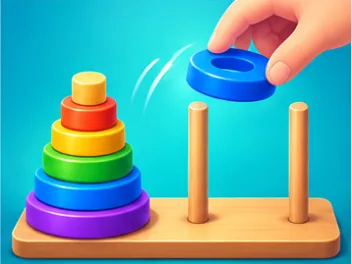
- Tower of Hanoi Ages 6 and up
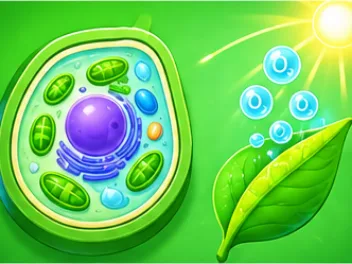
- Plant Cell and Photosynthesis Ages 10 and up
- Wolf, Goat and Cabbage Ages 6 and up
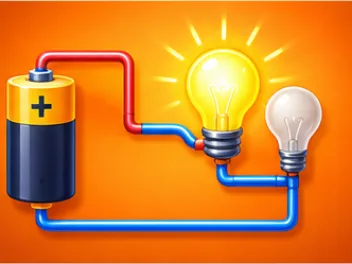
- Electric Circuits Ages 10 and up
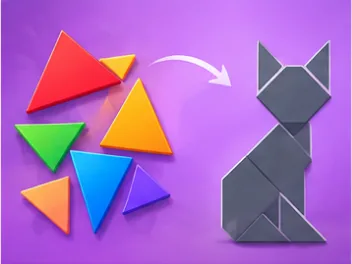
- Tangram Ages 6 and up
- Logic Gates Ages 10 and up
- Telling Time Ages 6 and up
- Algebra Balance Ages 10 and up
- Making Change Ages 6 and up
- Prime Factor Tree Ages 10 and up








Learning because you play, not the other way around
An educational game misses the mark the moment you can feel the worksheet under the scenery. These games are built the other way around: first comes an action that fits in one sentence — feeding a monster, turning a wire, placing a country on a map — and the knowledge comes on top of it, without ever announcing itself. You don't review your multiplication tables; you fill an album of monsters. Nobody is fooled, and it works anyway.
They all play in your browser, with no download, no installation and no account to create. A game takes two to ten minutes. Progress, stars and albums stay in the browser of whoever is playing.
Math without a single worksheet
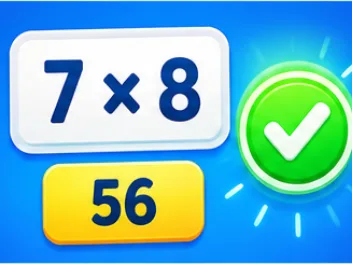
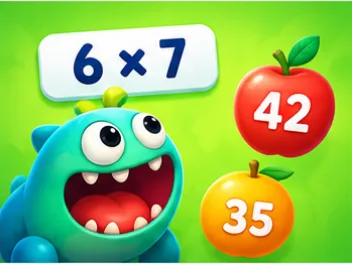
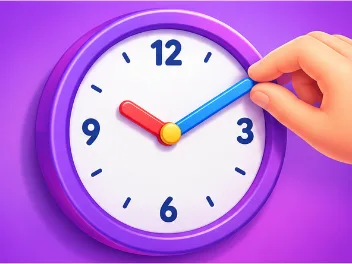
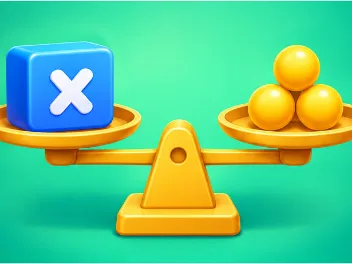
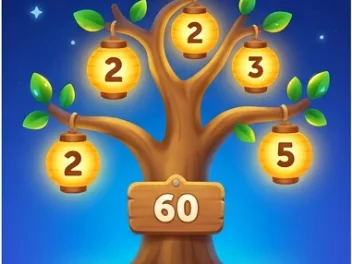
Multiplication Tables runs through a hungry little monster holding a slate: 7 × 8, four fruits float by, you tap the right one. Fourteen levels, fourteen critters to collect, and every mistake explained in pictures — seven rows of eight dots that light up and get counted. Mental Math takes the other road, the road of speed: twenty problems, all four operations, a timer and a leaderboard. And Telling Time tackles the most useful skill of elementary school: a time is called out, both hands start at 12, and it's up to you to set them — until you find out that the hour hand almost never lands right on a number. Making Change puts you behind a cash register, with euro coins and bills: the item costs €3.40, the customer hands you €5 — the game doesn't tell you how much change to give, so it's up to you to work it out and count it out coin by coin, with as few coins as possible. One step up, Algebra Balance has you solve 3x + 2 = 14 without a single formula: whatever you take off one pan, you take off the other, and the scale never tips. And the Prime Factor Tree splits every number into two factors, branch after branch, down to the primes that light up like lanterns: eight trees against the clock, solo or in a race.
Three classic puzzles train your reasoning rather than your answers. The Tower of Hanoi teaches you to break a problem down into identical smaller problems — that's recursion before you've ever heard the word. The Game of Nim hides a winning strategy that comes down to arithmetic, and that changes everything the day you spot it. Tangram has you handling flat shapes: seven pieces, thirteen silhouettes, and geometry that goes in through your fingers.
Science you can get your hands on
Electric Circuits shows the one thing that really matters in middle school: nothing lights up until the loop is closed. You rotate tiles, little beads of current start racing along, and series and parallel circuits are seen instead of calculated — a single bulb shines at full brightness, two on the same loop shine at half. Not one volt, not one line of Ohm's law.
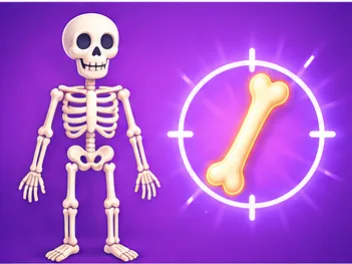
The human body comes as two companion charts: human bones you recognize by their shape, human body organs by where they sit. The liver is on the right side of the body, so it's on the left of a chart that faces you, and that's exactly the kind of thing you never forget once you've gotten it wrong. Plant Cell and Photosynthesis follows the path of water, from the roots to the chloroplast.
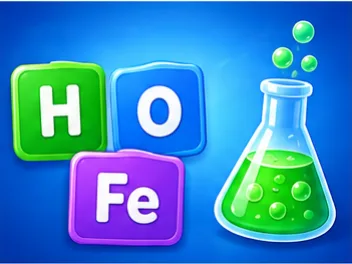
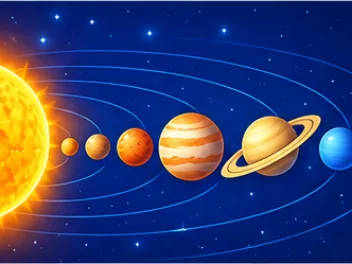
Higher and farther away, The Solar System asks you to order planets, moons and dwarf planets by distance or by diameter, each body drawn at its true relative size: Ganymede is bigger than Mercury, and you can see it. Chemical Elements uses the periodic table as its game board, so a right answer is a place on the table, not a line in a list.
Geography and history
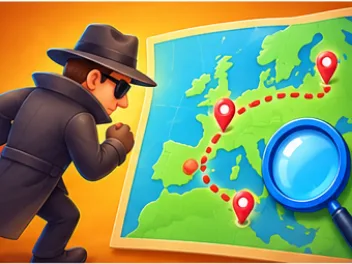
The World Map Quiz gives you no answers to choose from: a country is named, and you tap it on the map of its continent. 162 countries, ten levels, borders and coastlines drawn from public data, and a continent that fills with color under your fingers. World Capitals and the Flag Quiz cover the same countries as quizzes, both ways, with wrong answers taken from the same region to rule out the giveaways. Europe Chase turns it all into a pursuit: clues from country to country, and geography you pick up along the way.
Inventions in Order puts the wheel, the printing press, the telegraph and the microprocessor in chronological order. The number of possible slots grows with every card: the game gets harder without the rules ever changing.
Reasoning and code
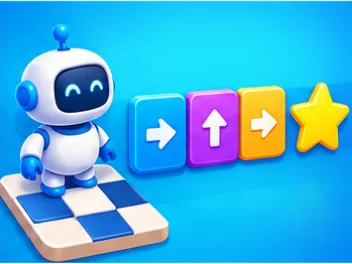
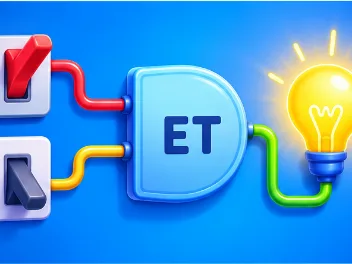
Code the Robot lays down the three building blocks of all programming — sequence, loop, condition — as instructions to stack up, then runs them step by step in front of the player who wrote them. Twenty-four levels, three worlds, no keyboard. Logic Gates go one floor down, underneath the code: an AND, an OR, a NOT, switches to flip and a lamp that has to follow the whole truth table — eighteen levels, all the way to building an exclusive OR out of four identical gates. Wolf, Goat and Cabbage is the oldest river-crossing puzzle in the book, and still the best one for discovering that solving a problem can mean taking a step back to move forward.
Who it's for, and from what age
Each game shows the age at which you can play it on your own: six for multiplication tables, tangram, the robot or the flags; ten for mental math, circuits, chemistry or the solar system. It's a minimum, not an age bracket: the 8 times table and the missing factor still trip up plenty of adults, and nobody places the spleen right on the first try.
The ones with a score keep your best result on the leaderboard; the others keep your progress and your stars, and ask nothing more of you.